- 01
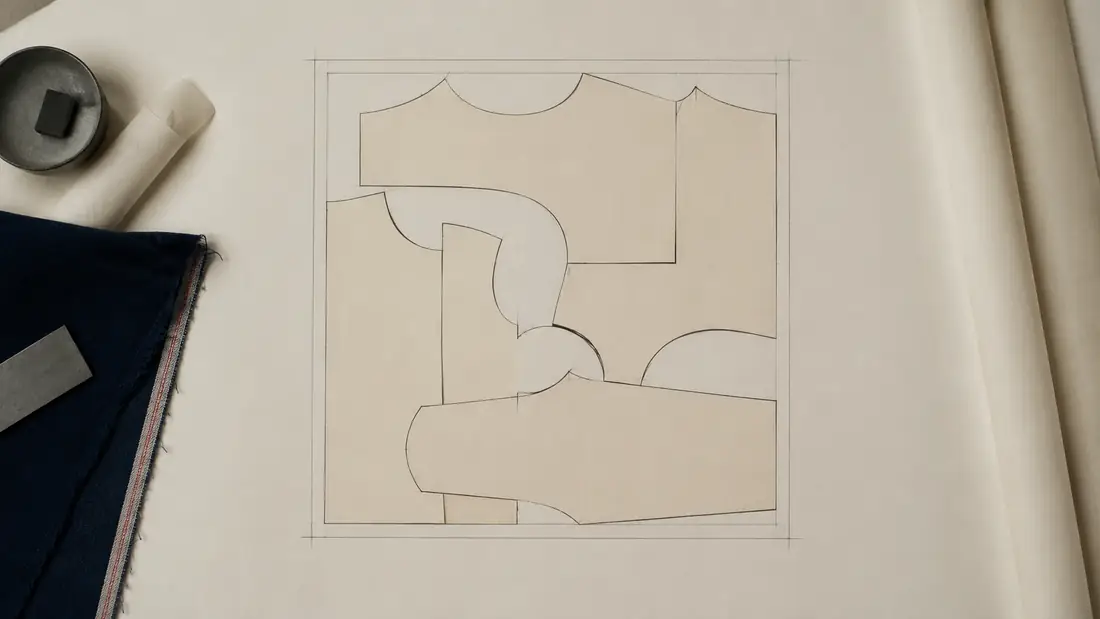
Take 2 cm off each edge
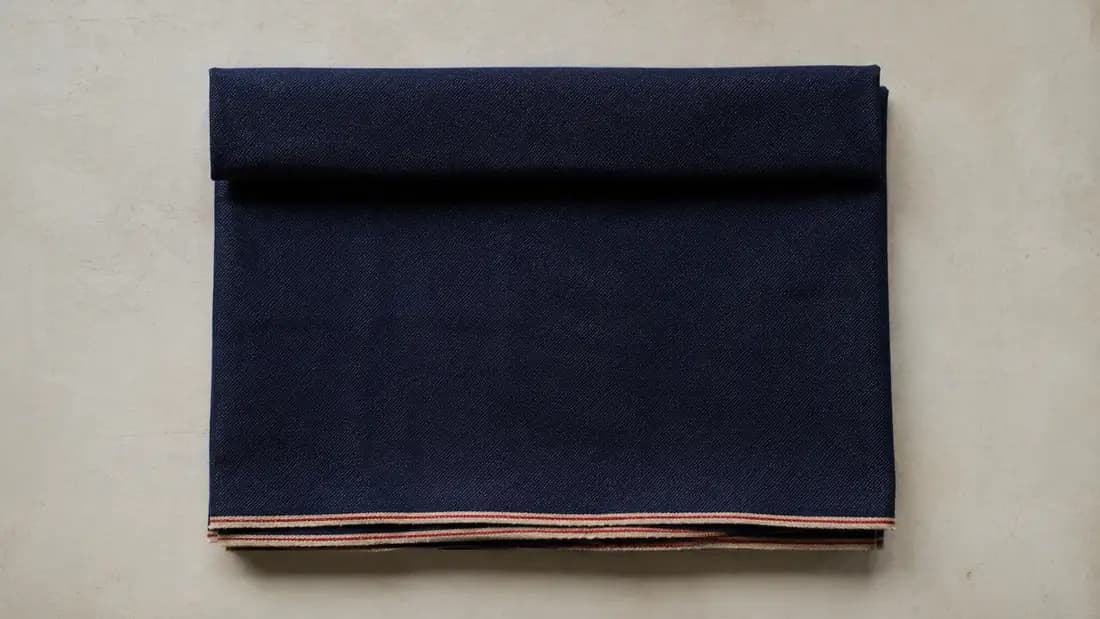
The width printed on the end of a bolt is the width of the cloth including its selvedges — the tightly woven strips down each edge that stop it fraying. Those strips are denser than the rest, often puckered, and sometimes carry printing, so a cutter does not lay pieces on them. Roughly two centimetres at each edge is unusable.
So a bolt sold as 110 cm gives about 106 cm to lay pieces on. On the drawing this is the hatched band down both sides.
- 02
Lay the pieces out, tallest first
Each piece is packed as the rectangle it fits inside, biggest first, each one dropped into the lowest place it will sit so the later pieces slot into the gaps the earlier ones left. That is what a person does with paper on a table.
Pieces that must follow the grain cannot be turned sideways. Bindings and waistbands can be, but only when the cloth has no direction of its own.
A rectangle overstates what a curved piece needs, because neighbours nest into one another’s hollows. A fixed allowance is taken off for that at the end, and it is listed in the breakdown rather than hidden. It can never take the figure below the bare area of the pieces themselves.
Shirt · M · 150 cm188 cm covered by the boxes · 100% of it is pattern piece - BKBack
- FRFront ×2
- PLFront placket ×2
- SLSleeve ×2
- YKYoke ×2
- PKPocket
- COCollar and stand ×2
- CFCuff ×2
- 03
Then change one number, and watch it fall apart
Same shirt, same size, same pieces. Only the width of the bolt changed. Nothing about the garment is different; the cloth simply stopped being wide enough to take two pieces across, so they had to go one below the other.
150 cm bolt1.70–1.90 m188 cm covered by the boxes · 100% of it is pattern piece 110 cm bolt2.80–3.10 m325 cm covered by the boxes · 82% of it is pattern piece The difference at the top of the range is 1.20 m. That is the whole reason this site exists, and it is the first thing the shop will ask you about.
- 04
Add back what the cloth will do
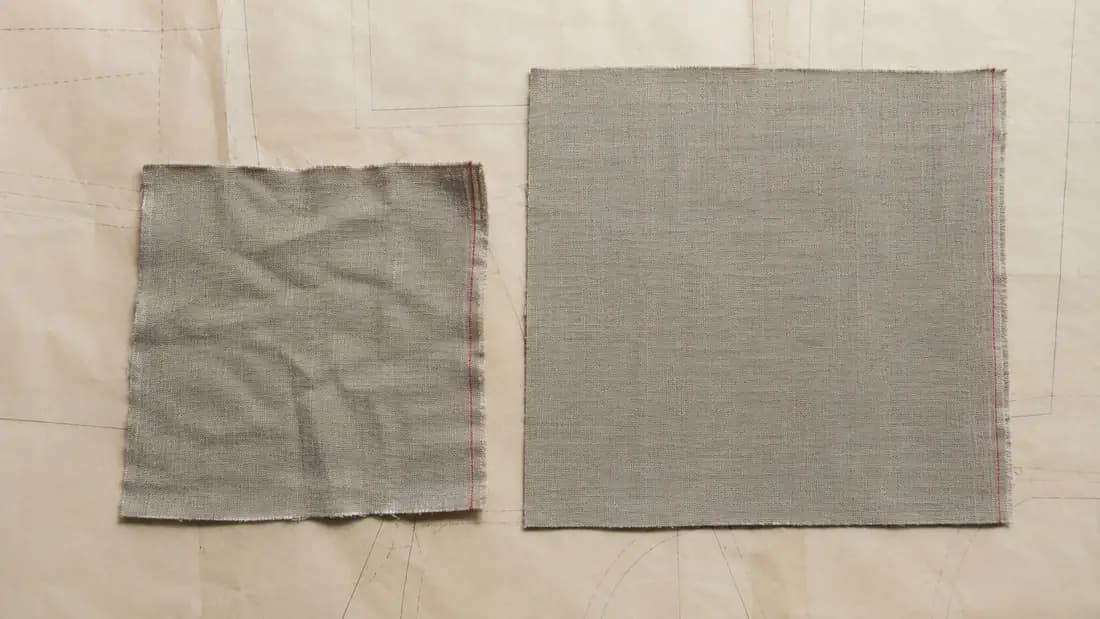
Shrinkage reserve. Cloth moves the first time it is washed, and it has to move before it is cut, not after. Between four and six per cent is held back depending on the garment. What a particular cloth really does is not knowable from here.
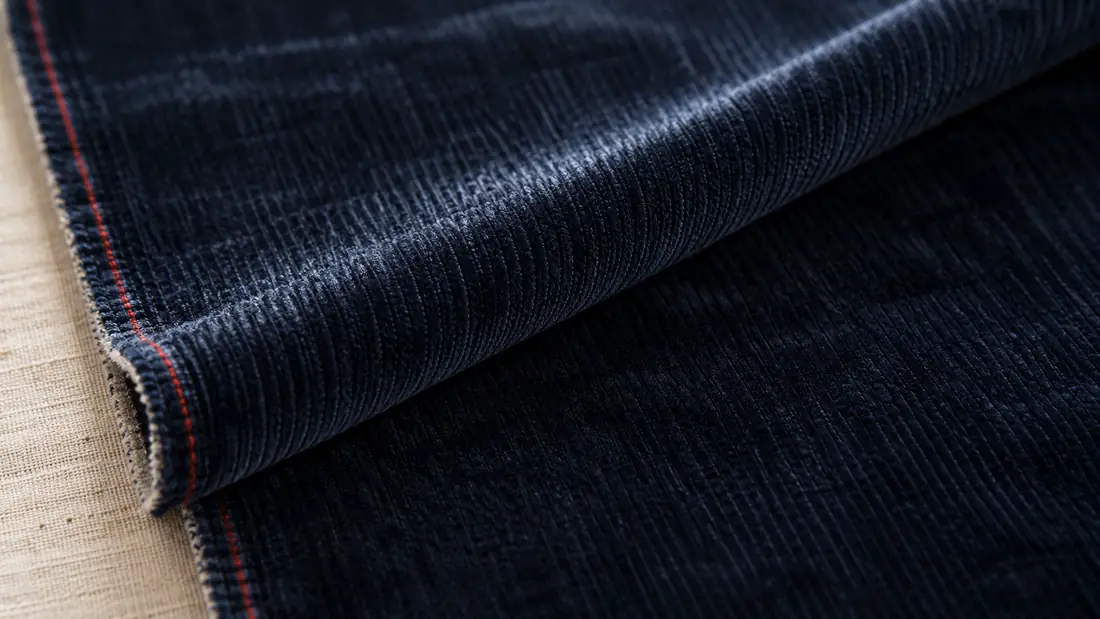
Pile and one-way prints. Every piece has to lie the same way up, so the trick of turning a piece head to toe to fill a gap is gone. About eight per cent.
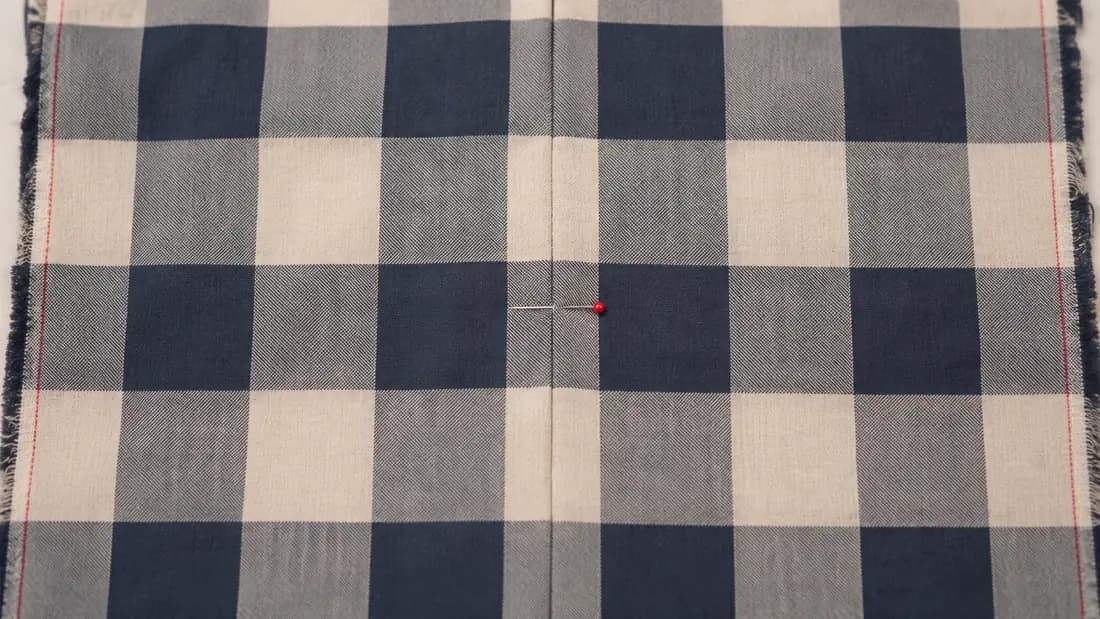
Stripes and checks. Matching costs part of a repeat at every row of pieces, in one direction for a stripe and in both for a check. This is the most expensive thing you can ask of a length of cloth, and the allowance made here assumes a modest repeat. A large repeat costs considerably more.
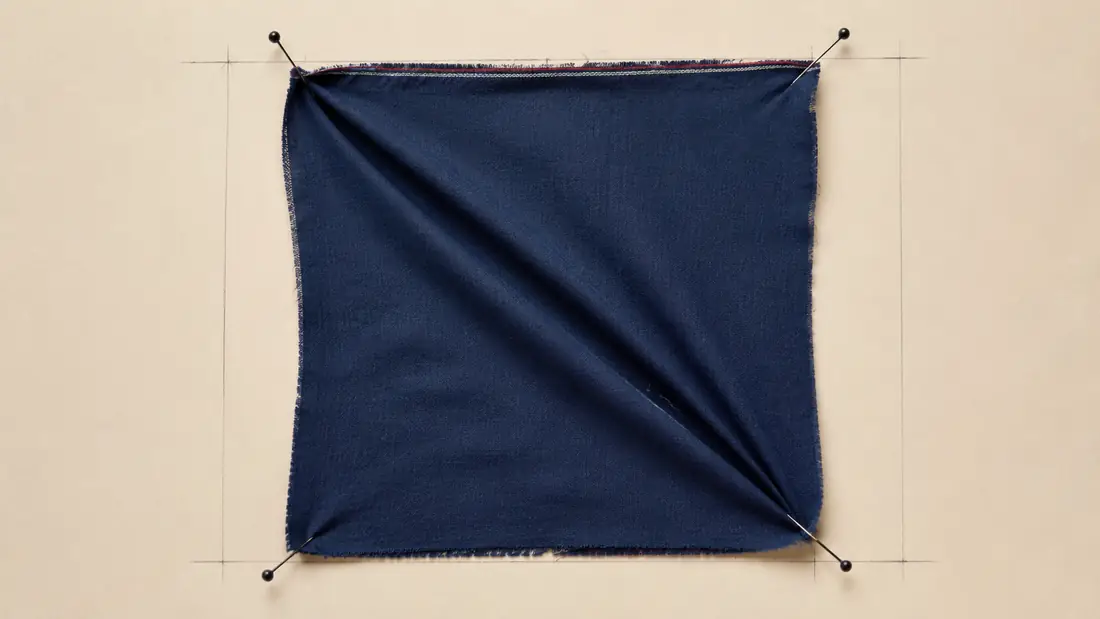
Bias. A piece cut at forty-five degrees sits inside a square much larger than the piece. A plain slip dress can want more cloth than a shirt with sleeves, a collar and cuffs.
- 05
Give a range, then say buy more than that
The bottom of the range is the layout above, laid out carefully. The top is the same layout for somebody who is not squeezing every piece: a straightening cut at the end of the bolt, one piece re-cut, an allowance kept a little generous.
Then thirty centimetres on top of that. Not to be careful for its own sake, but because the two mistakes are not symmetrical. Buy too much and you have facings, pockets, bindings and something for the next project. Buy too little and you go back to the shop for a length from a different dye lot, which will not match — and there is usually nothing to be done about that.
And the part where it stops
- The actual pattern you are using. This is a typical layout for this kind of garment, not a reading of your pieces.
- How you cut. Single layer, folded, or with the pieces laid out differently all change the length.
- What this cloth really does in the wash. The shrinkage held back here is a reserve, not a measurement of your fabric.
- The size of the repeat on a check or a large print. A big repeat costs far more than the allowance made here.
- Whether your fabric has a flaw in it. Shops cut around faults, and you may be handed a length with one in the middle.
If you are working from a commercial paper pattern, its envelope carries a yardage table worked out for that exact set of pieces by the people who drafted them. Follow that, not this.